
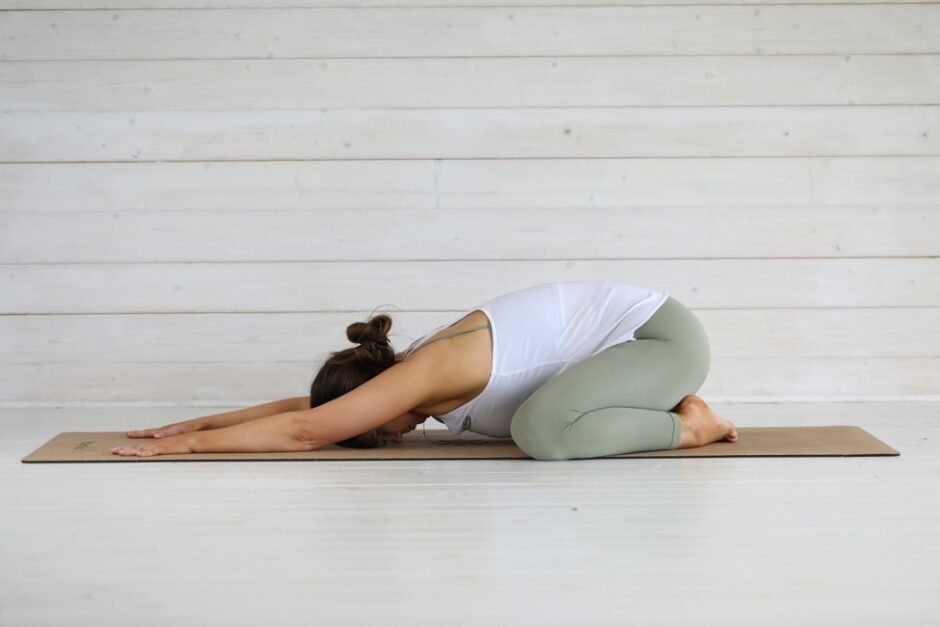
photo credit: @wildsoulmagsyogi via Unsplash
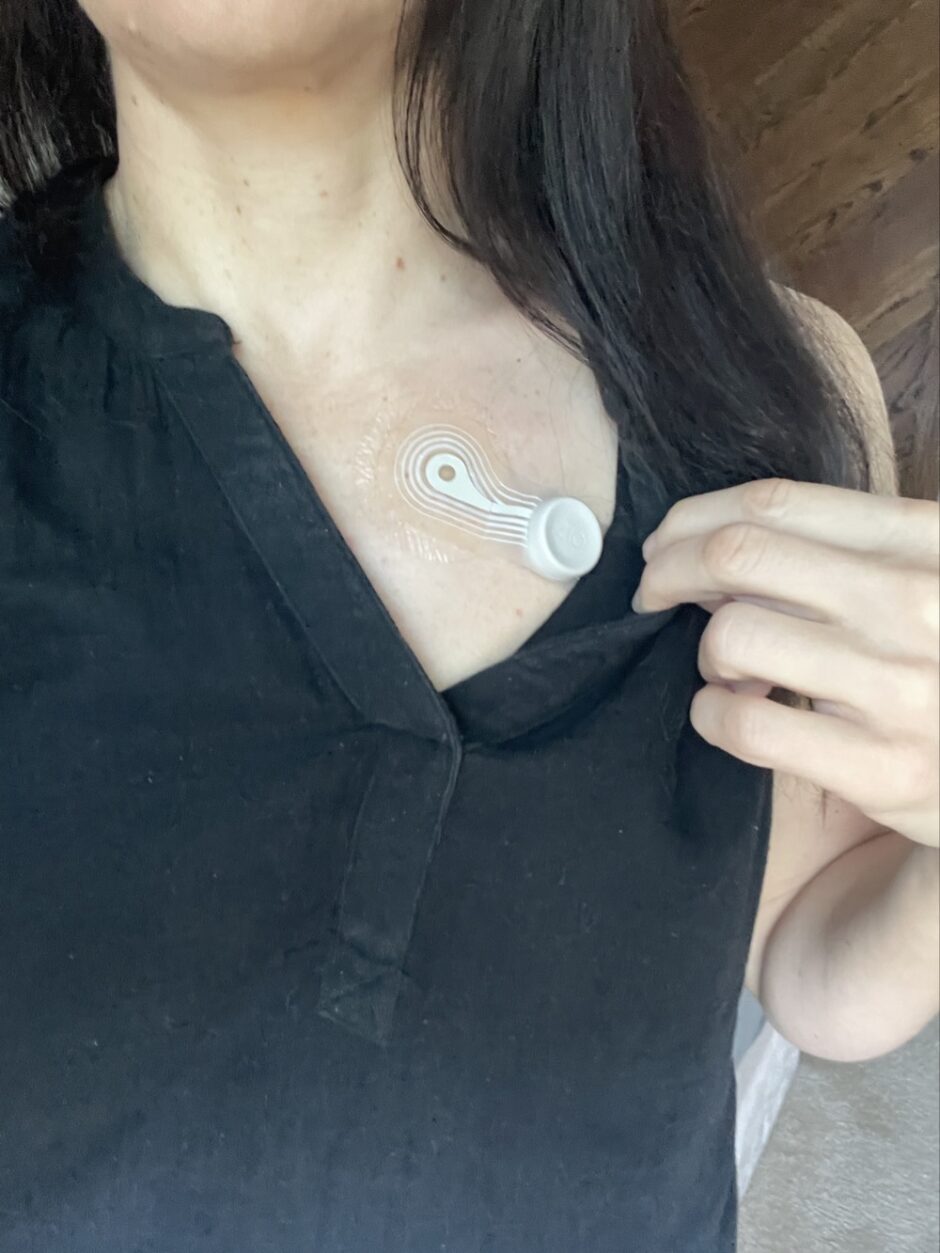
TL;DR: The good news is that I have not had any more episodes of palpitations or lightheadedness in the last few weeks, and only minor stomach/chest discomfort a couple of times (which I truly believe were food-related). The doctor I saw for my follow-up was very kind. She listened and recommended an echocardiogram, and a Zio patch (14-day EKG patch) to further eliminate any possible heart issues, and also recommended a food journal, in case I have bloating/stomach pressure again. I have another follow-up appointment in three weeks.
Earlier this week, I had a follow-up appointment regarding my episode of heart palpitations and lightheadedness exactly five weeks ago. I apologize because this is going to be a lengthy post. If you just want the Cliff Notes, the TL;DR told you all that’s important. If you want more details, keep reading.
I am not going to reiterate a lot of the things I shared about my history with palpitations and chest discomfort in the past (you can go read my previous post for the background story), unless you have specific questions. I still think my history with hypochlorhydria and associated bloating could be a factor, and I think there could be a few other things at play here.
I’ve done some research. Which obviously translates to: I googled a ton of sh*t, and went down every (im)possible rabbit hole. As one does.
THE RABBIT HOLES
With the help of AI, of which I am in many ways very sceptical, I explored possible causes for my episode. I fed AI the situational facts of my episode, including all my recent lab results, and it came up with these possible explanations: different types of – usually benign, temporary – arrhythmias (Sinus tachycardia, atrial tachycardia, PVCs), endocrine triggers, panic attack, and also Gastrocardiac Syndrome, or Roemheld Syndrome (named after the doctor who discovered it).
I am pretty sure you haven’t heard of the latter. I hadn’t either, but the linked video explains it very well (it’s only 4+ minutes long). In short, it’s a condition where gastrointestinal issues—such as excessive gas, bloating, or a hiatal hernia—trigger cardiovascular symptoms like palpitations, chest pain, and dizziness, often caused by pressure on the diaphragm and the vagus nerve.
Apparently, it’s not at all uncommon in otherwise healthy and athletic persons. Athletic training can trigger symptoms through combined mechanical, digestive, and neurological factors. High-intensity exercises compress the abdomen, forcing the stomach upward and irritating the vagus nerve. Intense exercise also diverts blood flow from the GI tract to active muscles, slowing digestion and causing sudden bloating or gas. And because athletes possess high vagal tone, their nervous system is uniquely hyper-reactive to this physical pressure and gas, sending signals through the vagus nerve that mimic cardiac symptoms despite a healthy heart.
At this moment, based on my previous bouts with stomach issues and (so far) all negative results related to my heart health, it clearly supports my theory that my gut and vagus nerve could potentially be responsible for my occasionally wild chest/heart-related symptoms.
There are other things I considered as possible contributing factors, but they all point back to an interaction between the gut, the vagus nerve, and the heart:
- hypochlorhydia (low stomach acid) (this can trigger cardiac symptoms through bloating/gas and pressure on the vagus nerve)
- electrolyte imbalances (unlikely, I chug electrolyte drinks like it’s my job), and previous tests have come back normal
- dehydration (possible, but unlikely, because I am usually good at drinking enough water throughout the day)
- caffeine (nope, not that late in the afternoon. I only drink coffee in the morning and not an excessive amount)
- cortisol levels (will ask to get them checked as cortisol (= internal stress) can play a role)
- perimenopausal hormonal fluctuations (possibly wild swings in estrogen levels that can trigger vasomotor symptoms)
- stress/anxiety/panic attack (the CATCH-ALL, amrite?)
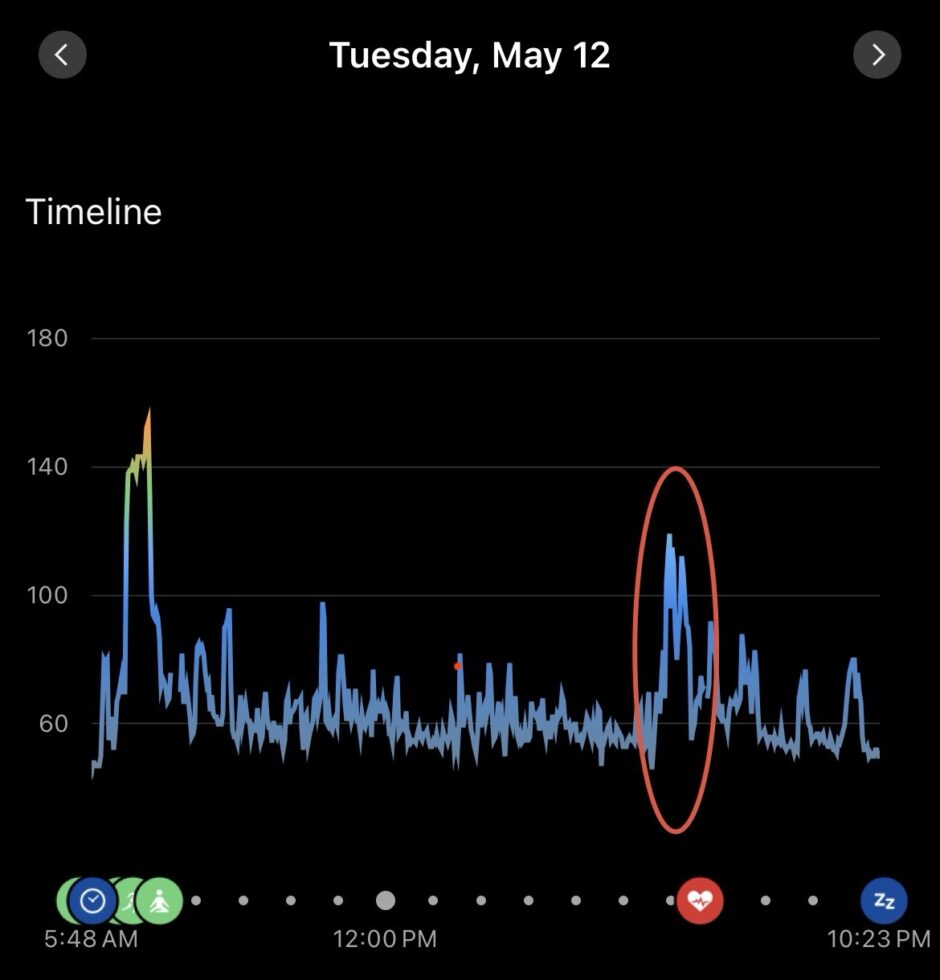
This is the narrative of my acute episode that AI spit out based on my input. (I removed the source links, but you can be sure I did cross-check where the information actually came from.)
Gastrocardiac syndrome—also commonly known as Roemheld syndrome—is a phenomenon where gastrointestinal distress directly triggers cardiovascular symptoms like heart palpitations, skipped beats (ectopic beats), chest tightness, or a sudden drop or spike in heart rate.
Given your previous notes about a healthy lipid panel and a low resting heart rate (RHR), your suspicion is highly logical. If your cardiovascular system is already highly sensitive and efficient, it may be uniquely reactive to the neurological and physical triggers of this syndrome.
Because your resting heart rate is already under 60 bpm, you likely have what is called high vagal tone—meaning your vagus nerve is already highly active and dominant, keeping your heart naturally slow and relaxed.
However, a highly active vagus nerve can act like a highly sensitive guitar string. If a digestive episode (like bloating or reflux) “plucks” that string, your heart may react more noticeably than it would in someone with lower vagal tone. This can manifest as sudden drops in heart rate, followed by a compensatory spike or a flurry of palpitations as your heart adjusts.
The fact that your palpitations happened in the late afternoon while sitting at your work desk is almost a textbook-perfect setup for a gastrocardiac episode. Here is exactly why that specific scenario triggers it:
1. The “Slouching Desk Compress” (Mechanical Trigger)
When you sit at a desk, especially later in the day as your posture begins to slump, you naturally compress your abdomen.
- This slouching folds your torso inward, pushing your stomach upward.
- If your stomach is already distended with trapped gas because you can’t burp, this sitting posture physically jams that trapped gas pocket and your diaphragm directly up into the space where your heart sits.
- This physical crowding mechanically irritates the heart, causing it to “flip-flop” or throw a palpitation.
2. The Late Afternoon Gas Accumulation (The Perfect Storm)
By the late afternoon, your body has had to deal with breakfast, lunch, and hours of swallowing air or digesting food. If you cannot burp, that gas accumulates all day long like an inflating balloon. By 3:00 PM or 4:00 PM, the pressure in your upper GI tract peaks, placing maximum pressure on your vagus nerve.
3. Vagal Stimulation from Being Sedentary
While sitting quietly at a desk, your heart rate is naturally at its lowest (close to your resting heart rate of under 60). As we discussed, your highly sensitive vagus nerve is fully in control when you are resting. When the massive bubble of trapped afternoon gas presses against that highly active nerve, it can easily trigger a sudden ectopic beat or a brief flurry of palpitations.
Armed with this information, I went to my follow-up appointment on Monday.
THE FOLLOW-UP VISIT
I expected to see my assigned primary care physician, Dr. M, or the nurse practitioner I saw previously, but instead I saw someone else altogether.
(Those are the joys of having a primary care provider at a university clinic—you’re frequently seen by rotating residents. I usually don’t mind because the resident doctors might not be as experienced, but they’re young and enthusiastic and often more willing to listen and explore things when presented with unfamiliar concepts.)
In Dr. H’s case, I liked her immediately. She took the time to listen to my entire history of heart palpitations and chest pressure (dating back to 2019), the stress test, the trip to the ER, my endoscopy, my own suspicion of hypochlorhydria (low stomach acid), and how the GI doctor didn’t take me seriously at all, and my experiment with hydrochloric acid supplements. She acknowledged that some physicians can be overly tied to medical literature, but she said she also believes that patients know their own bodies best and should be their best advocates [SAY IT LOUDER FOR THE PEOPLE IN THE BACK].
I mean, the information is all over the Internet – both for hypochlorhydria and gastrocardiac syndrome – but not too many doctors are willing to look. So, I told Dr. H that I had already done quite a bit of research, and she was completely open to exploring those possibilities further. That alone made me like her a lot; she didn’t dismiss anything I said.
COURSE OF ACTION
However, she suggested ordering another echocardiogram first. She thought that it was unlikely to reveal any structural heart issues, but it is always a good idea to completely rule out any cardiac issues – and I definitely agree with that. I also asked her about the long-term EKG patch. Even though it seems unlikely that I’ll have another episode in the next two weeks, given how far apart they’ve been, she still supported the idea and said, “Let’s see what else we can learn from it.”
She promised to also look into Gastrocardiac Syndrome before our next visit, and asked about my daily routine and whether stress might be playing a role. While I didn’t feel explicitly stressed, you probably know that I’m someone who likes to be busy and wants to do ALL THE THINGS. And Jon did mention recently that he thinks I am doing too much and that I tend to put pressure on myself. So, I am trying to listen.
I am already working on lifestyle changes. As I mentioned, I changed a few things in the last few weeks (mainly attempting to ‘de-stress’ my day-to-day life, whatever that means), and I spent quite a bit of time in child’s pose (and my hammock. Ha, I had to slip that in.) I will also keep a symptom journal until my next follow-up visit.
My next appointment is in early July. By then, I’ll have completed both the echocardiogram and the 14-day EKG patch monitor. While this week didn’t bring new insights beyond the theories I presented, I was pleasantly surprised and really grateful to be taken seriously and to have a provider genuinely willing to explore my symptoms further.
Kudos if you made it all the way down here. I know this was a lot to digest (pun intended).

Melissa
June 18, 2026 at 8:50 pmIt sounds like you got a good doctor who is willing to explore all options. Will you have her at your next appointment? Hopefully you get more answers then.
San
June 19, 2026 at 10:05 amYes, she was a good doctor. I am not sure if I am going to see her again for the follow-up but I hope so.
NGS
June 19, 2026 at 7:17 amIt’s nice that you have been able to get such extensive feedback.
However, this is the second comment I’ve made today expressing concerns over using ChatGPT and other LLMs for sensitive information on mental and physical health. Stop using it! You’re giving it such personal information with no compensation or credit. Who knows who or what organization it will share that information with. Furthermore, it’s using vast amounts of resources and could be feeding you completely fabricated information. I feel like a Luddite over here railing about the use of technology, but it really is bad for us as a species and even worse for the planet. (Feel free to delete if you think this is overstepping. I just am so worried that we’re all reaching for a new, unproven technology and giving it our personal information.)
San
June 19, 2026 at 10:09 amEngie, I absolutely know where you’re coming from and don’t blame you for being so sceptical of AI. I have very mixed feelings about it as well (and I am in a real dilemma because we’re highly encouraged to use it at my work now). However, I am using it sparingly but definitely don’t take the information for face value (I always look for credible sources that back up the information). I don’t think it’s going away and I think good can come from it, but we have to educate and be mindful of how we use it!
SHU
June 19, 2026 at 7:34 amglad you are doing the Zio patch!
As for cortisol – as an endocrinologist I have to note that the two issues with cortisol (Cushing’s syndrome or adrenal insufficiency) woudn’t really make much sense with your symptoms. Checking an AM cortisol level doesn’t tell you if you’re stressed (it really only checks for insufficiency). Cushing’s syndrome generally presents with weight gain, high BP, stretch marks, etc. Adrenal insufficiency with low BP, fatigue, weight loss, hyperpigmentation. I can’t really link palpitations to either. I think this is potentially one rabbit hole not going down but that is just my opinion :) I am so glad you are doing the Zio patch though. It would be the best if an episode was captured, but if not at least you can ensure you don’t have an unusual number of ectopics (I have >1000 PVCs/day for example).
San
June 19, 2026 at 10:11 amThanks for the insights into cortisol. It’s just one thing I thought could be checked out in regards to “stress-levels” in my body, but I hear you when you say you don’t see a direct connection with palpitations. I am also very thankful that the doctor agreed for me to do the Zio patch, so we’ll see what it reveals about my heart!
Birchie
June 19, 2026 at 7:59 amWith respect to folks who disagree, I think that it can be very helpful to run symptoms through the ol’ Chat. Especially since you’re fact checking it and using the info to talk over with your doctor.
Whatever the cause, the hammock can only make things better!
San
June 19, 2026 at 10:12 amI have very mixed feelings about AI, but yes, I also think it can be helpful and even beneficial – we just have to learn how to use it responsibly! And I agree, the hammock will only help :)
Suzanne
June 19, 2026 at 9:03 amI’m so glad you had such a positive experience with your provider, and hope you get some helpful answers and a clear path forward.
San
June 19, 2026 at 10:13 amThanks Suzanne. I was so relieved that the doctor was so open to explore my symptoms and really hope we can get to the bottom of them.
Nicole MacPherson
June 19, 2026 at 12:25 pmThank you so much for this update, San. I am SO glad you have a doctor that is taking you seriously. It does sound like you might have a possible thing to point at AND I also think it’s a good idea to de-stress and relax as much as possible. Stress has such a significant impact on our bodies and if you have a medical condition, it can only exacerbate it. So good job taking child’s pose and hanging in the hammock!
San
June 20, 2026 at 7:00 pmThanks, Nicole. I do feel like I am in good hands right now. We’ll see what we learn.
Elisabeth
June 19, 2026 at 1:53 pmThanks for the update.
I feel like most health things seem to have multiple causes and symptoms. So, like Nicole said, if there are underlying medical issues and you add stress to the mix it’s… a lot.
You’re doing a great job of wading through the possibilities and being responsible with your health and medical care. I hope you get some concrete answers, but am glad the general take-aways are positive AND hope you get to spend so much time in your hammock.
San
June 20, 2026 at 7:00 pmYes, you’re absolutely right, Elisabeth…. with most health things, it’s probably a mix of multiple factors and it’s hard to pin them down, but I am thankful that someone is willing to look with me ;)
Michelle G.
June 20, 2026 at 4:52 amThank you for the update! I’m glad you’re checking into it thoroughly, just to rule things out. How nice to get a doctor who listens to you. And I’m glad that you’ve been feeling better and enjoying your hammock – you can mention it as many times as you like!
San
June 20, 2026 at 7:01 pmThanks Michelle! I do feel like I am in good hands right now.
Tobia | craftaliciousme
June 22, 2026 at 4:44 amI love when a doctor actually listens and you don’t feel rushed in explaining and telling all the things. I hope the test will be helpful and nOt reveal any serious stuff.
Stress can be such a trigger and it’s boiling up so slowly that we may not perceive it as stress but the body is constantly on high alert. I am glad you are listening and make changes.
Lisa's Yarns
June 22, 2026 at 12:42 pmI am glad you had a good experience with this practitioner and that you felt heard! It sounded like the GP you were seeing previously was kind of dismissive so maybe wasn’t the right fit for you. I’m glad you are able to do further monitoring!
Stephany
June 22, 2026 at 7:04 pmHeyyy, we’ll be echocardiogram twinsies soon! My echo is schedule for mid-July. :)
Honestly, I think it’s fine to use AI to do some cross-checking about symptoms. You only did it so you could go to this doctor’s appointment armed with some information to help, since you’ve had such terrible luck in the past with doctors who aren’t listening to you. AI isn’t going anywhere and we might as well learn to use it responsibly.
Tuesday Coffee Chat – theinbetweenismine
June 30, 2026 at 11:30 am[…] we had a coffee chat today… I would mention again that I am wearing the Zio patch right now, and while I was fully expecting to wear it for two weeks without an incident because […]
Another health update – theinbetweenismine
September 1, 2026 at 7:30 am[…] finally an update on my health situation. As a quick reminder, I had an episode of heart palpitations and lightheadedness back in May, but […]